Enhancing Cybersecurity Compliance with Leased Lines
Small businesses increasingly face regulatory and reputational risks from data breaches. One practical measure to strengthen defences is leased lines for cybersecurity compliance — dedicated, private connections that create secure data pathways between sites and cloud services. Within the first 100 words it is important to acknowledge how a persistent, uncontended circuit can support encrypted business connectivity, reduce exposure on public networks and help meet requirements for ISO and GDPR obligations.
leased lines for cybersecurity compliance
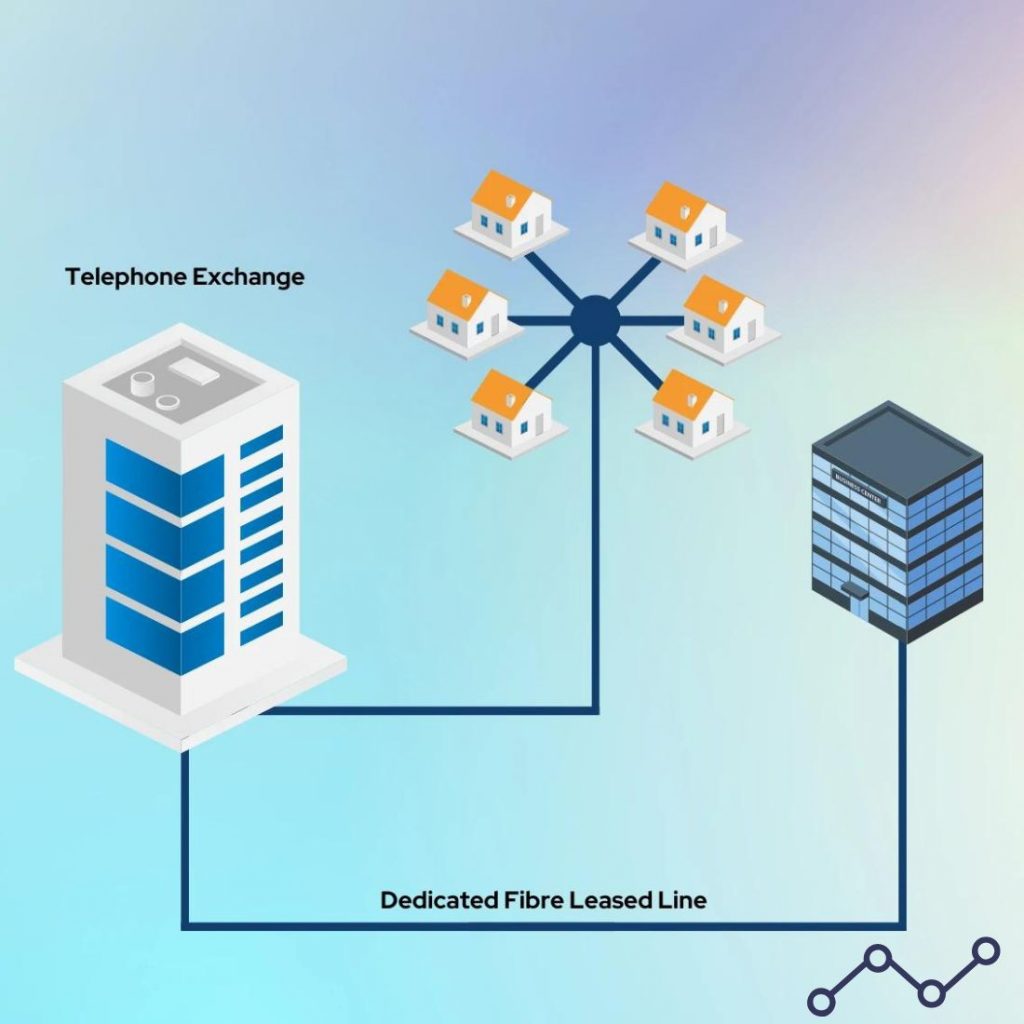
Leased lines provide consistent bandwidth and private network connectivity that differs from shared broadband. For organisations handling sensitive customer data or operating under standards such as ISO 27001, these dedicated links make it easier to demonstrate controls around data in transit. They complement encryption, segmentation and monitoring strategies by removing a large portion of the uncontrolled internet surface where many attacks begin.
Why leased lines help meet compliance obligations
- Secure data pathways: Traffic kept on a private circuit avoids many of the interception risks found on public internet routes.
- Encrypted business connectivity: While encryption is essential, pairing it with a dedicated physical path reduces the number of attack vectors and simplifies key management scopes.
- ISO compliance connectivity: Leased lines support the technical and organisational measures auditors often expect for confidentiality and integrity controls.
- GDPR secure transmission: When personal data is transmitted over private channels with appropriate encryption and logging, it strengthens lawful processing records and breach mitigation evidence.
- Reducing breach risk: Private circuits limit exposure to the general internet, lowering the likelihood of man-in-the-middle attacks, packet snooping and opportunistic exploits.
Practical benefits for small businesses
For SMEs, leased lines are not just for large enterprises. Practical advantages include:
- Predictable performance for cloud-based backups and hosted applications — reducing business disruption and ensuring consistent audit logs.
- Improved incident response: with a controlled path, monitoring tools generate clearer telemetry, making anomalies easier to spot.
- Segmentation support: connect critical systems over a private link while keeping general internet access separate, strengthening network zoning principles.
- Vendor compliance: many suppliers and partners require proof of secure, reliable connectivity for data exchange; leased lines provide measurable guarantees.
How leased lines fit into a compliance programme
Implementing leased lines should be part of a wider information security and governance approach. Key steps include:
- Map data flows to identify which systems need private connectivity versus those that can remain on shared networks.
- Combine private links with robust encryption (for example TLS and IPsec) so that even if the physical layer is compromised, data remains protected.
- Ensure Service Level Agreements (SLAs) include availability, latency and restoration targets that match your risk appetite and business continuity plans.
- Integrate logging and monitoring across the leased line endpoints so audit trails are complete and tamper-resistant.
- Document controls and rationale in your information security management system (ISMS) to aid ISO audits and regulatory reviews.
Technical considerations and alternatives
Leased lines come in different forms: fibre point-to-point, Ethernet Private Lines and other dedicated circuits. Consider the following:
- Capacity: choose a bandwidth that supports peak loads, encryption overhead and future growth.
- Resilience: evaluate diverse routing or redundant circuits to avoid a single point of failure.
- Cost vs risk: while costs are higher than commodity broadband, the reduction in breach risk and simpler compliance evidence can justify the investment.
- Managed services: some providers offer managed encryption and monitoring that can simplify operations for small teams.
Example
Example — A two-site consultancy handling client financial records moved its file replication over a leased line. By using a private circuit with end-to-end encryption and centralised logging, the firm reduced transfer times, maintained clear audit trails for client consent, and satisfied an ISO 27001 auditor’s requirement for controlled data transmission.
Measuring success and ongoing maintenance
Assess the impact of leased lines on compliance by tracking relevant metrics: uptime, packet loss, detection time for anomalies, and the completeness of transmission logs. Regularly review your encryption standards and access controls to remain aligned with regulatory guidance and best practice. Periodic penetration testing and third-party audits will validate that the combination of private connectivity and operational controls effectively reduces exposure.
Leased lines are not a silver bullet, but they are a pragmatic component of a layered security model. For small businesses seeking ISO compliance connectivity or aiming to ensure GDPR secure transmission of personal data, private network connectivity offers a clear, demonstrable improvement in control and auditability.
In conclusion, leased lines for cybersecurity compliance provide a dedicated, reliable foundation for encrypted business connectivity and secure data pathways, helping small organisations reduce breach risk and meet regulatory expectations.