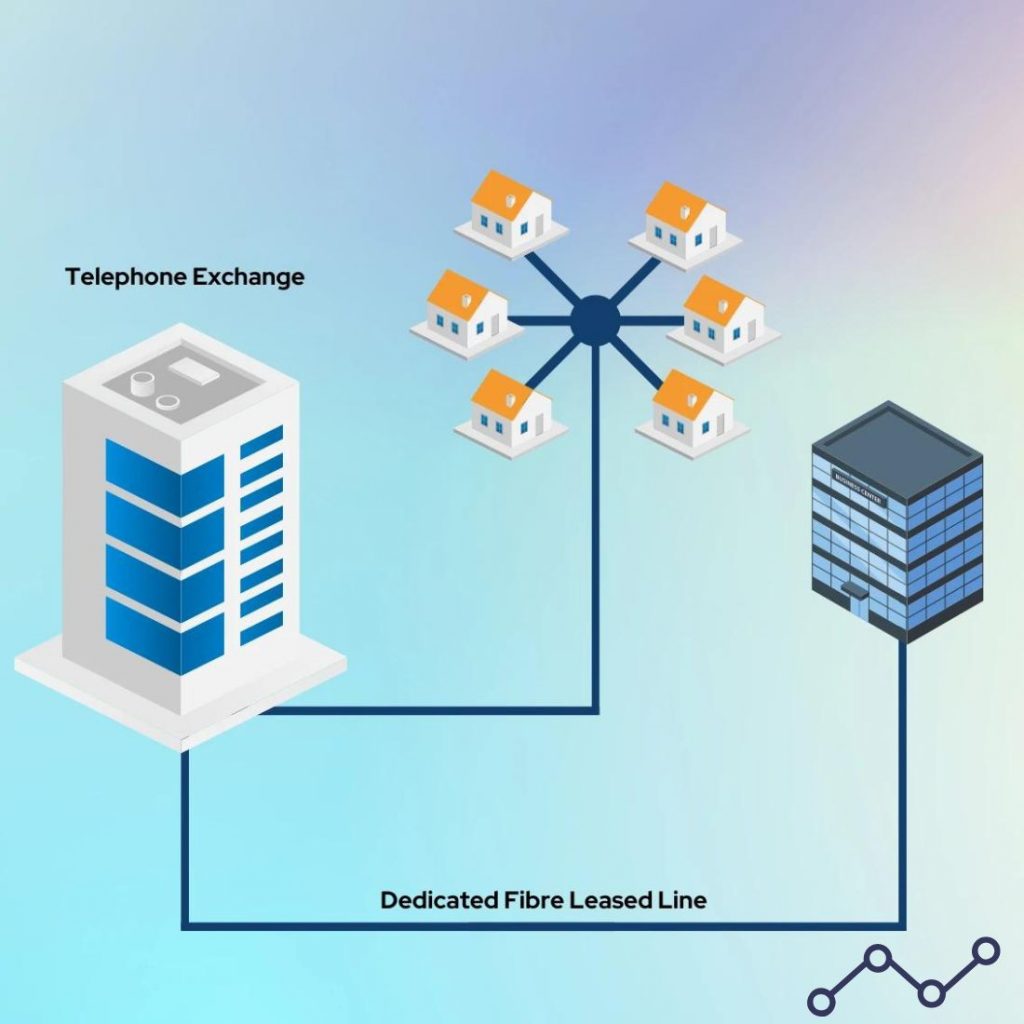

Small and medium-sized businesses (SMBs) are always looking for ways to save money while improving the quality of their products and services. One way to achieve this is by switching to a cost-effective leased line for small businesses. A leased line is a dedicated point-to-point connection that supplies reliable and secure internet connectivity for businesses. In this post, we will discuss how SMBs can save money by using a dedicated leased line and how to choose the right provider and package.
Cost Savings with a Dedicated Leased Line
A dedicated leased line offers several advantages over traditional broadband connections, which can result in cost savings for SMBs.
Firstly, leased lines supply faster speeds than broadband, which can increase productivity and reduce downtime. According to a survey conducted by ECI, businesses using a leased line experienced 70% fewer network outages than those using broadband. This translates to significant savings in lost productivity and customer trust.
Secondly, leased lines are more dependable than broadband connections. A dedicated leased line is not shared with other users, which means that businesses do not have to worry about contention issues that can affect broadband speeds during peak times. Additionally, leased lines are checked 24/7 by the provider, which means that any issues can be identified and fixed quickly, further reducing downtime.
Thirdly, leased lines are more secure than broadband connections. With a dedicated leased line, businesses have a private connection that is not accessible to the public. This means that the risk of cyber-attacks and data breaches is significantly reduced, which can save businesses from costly legal and reputational damages.

Choosing the Right Leased Line Provider and Package
Choosing the right leased line provider and package is crucial for SMBs looking to save money. Factors to consider include bandwidth requirements, location, and the level of support needed. Before choosing a provider, businesses should assess their internet usage and decide how much bandwidth they need. This will depend on the size of the business, the number of employees, and the types of applications used. Providers offer different packages with varying speeds and bandwidth, so it’s important to choose one that meets your needs.
Finally, the level of support needed is another crucial factor to consider. Providers offer various levels of support, ranging from basic to premium. Basic support may only include monitoring and maintenance, while premium support may offer 24/7 customer service and faster response times. Businesses should choose a support level that meets their needs and budget.
E-Commerce Case Study
To illustrate how an SMB can save money by switching to a dedicated leased line, let’s consider a small e-commerce business that previously used broadband. The business experienced frequent network outages, resulting in lost sales and customer complaints. After switching to a dedicated leased line, the business saw a 50% reduction in downtime and was able to process more orders, resulting in increased revenue.
The dedicated leased line allowed the business to offer a faster and more reliable service to its customers, which increased customer satisfaction and loyalty. The improved connectivity also allowed the business to explore new opportunities, such as offering video consultations with customers and expanding into new markets.
Maximising Cost Savings
To maximise the cost savings associated with a dedicated leased line, SMBs can use cloud-based applications to reduce the need for on-site infrastructure. Cloud-based applications are hosted on remote servers, which means that businesses do not need to invest in expensive hardware or software. Additionally, cloud-based applications are scalable, which means that businesses can easily adjust their usage and only pay for what they need.